
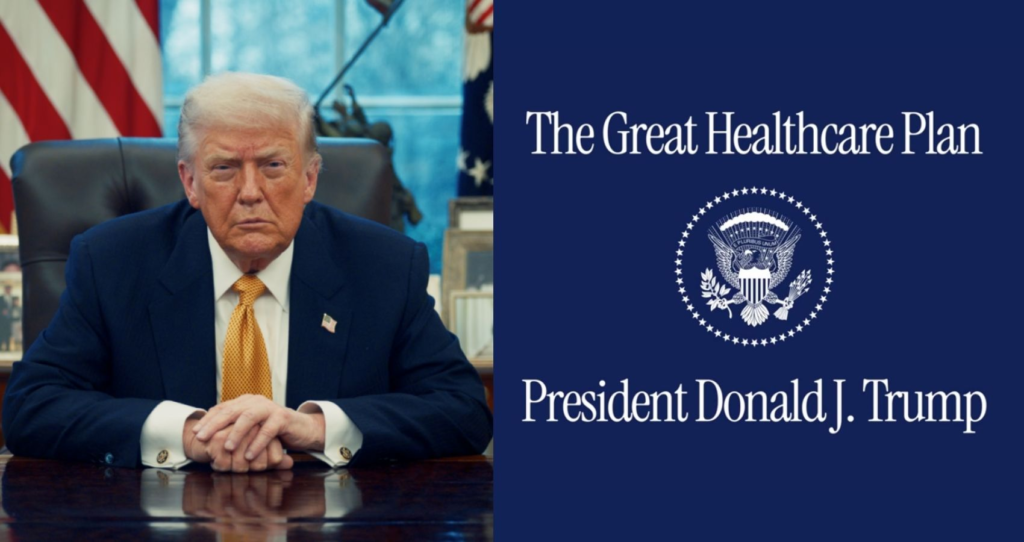
The Great Healthcare Plan is a healthcare policy initiative proposed by President Donald J. Trump of the United States in January 2026. The plan is a comprehensive framework intended to reduce health care costs, increase transparency in the health system, reform insurance market incentives, and expand consumer choice. The proposal was formally introduced by the White House and presented to the U.S. Congress for legislative consideration.
Background
In early 2026, facing growing public concern over rising health care costs and the expiration of enhanced subsidies under the Affordable Care Act (ACA), the Trump administration announced the Great Healthcare Plan as a central policy priority. The initiative draws on a combination of executive actions from the administration’s first and second terms, and advocates substantial reform of existing health care financing and delivery systems.
The plan has been described by the White House as a departure from traditional large‑scale health system reforms such as those embodied in the ACA. Instead, it focuses on lowering costs through market‑oriented measures, direct consumer incentives, and enhanced price transparency.
Objectives
The stated goals of the Great Healthcare Plan include:
Lowering Prescription Drug Prices
The plan calls for codifying most‑favored‑nation drug pricing agreements so that Americans pay prices for prescription drugs similar to those paid in other developed countries. It also proposes to expand access to certain verified safe medications by allowing them to be sold over‑the‑counter, thereby reducing both prescription costs and the need for doctor visits.
Reducing Insurance Premiums
A central component of the plan is the redirection of federal subsidy payments away from large insurance companies and instead providing funds directly to eligible individuals. This is intended to give consumers greater control over their health care purchasing decisions. The plan additionally proposes full funding for a cost‑sharing reduction (CSR) program, which the administration asserts would lower premiums on common ACA marketplace plans by more than 10%, according to Congressional Budget Office estimates.
Holding Insurers Accountable
To increase accountability in the insurance market, the plan introduces a “Plain English Insurance” standard, requiring insurers to publish clear, comprehensible rate and coverage comparisons. It also mandates insurers to disclose the proportion of premiums allocated to claims versus overhead and profits, as well as data on claims denials and average wait times for routine care.
Maximizing Price Transparency
The plan mandates that health care providers and insurers participating in Medicare or Medicaid prominently post prices and fees at their facilities. The administration characterized such transparency requirements as necessary to empower consumers to make informed decisions and to promote competition.
Legislative Status and Reception
As of its release in January 2026, the Great Healthcare Plan had been issued primarily through a White House fact sheet and related materials. No detailed legislative text or timeline for implementation had been published, and the framework remains subject to congressional approval.
The proposal has garnered mixed responses. Supporters emphasize its focus on price transparency, consumer choice, and potential cost savings. Critics, including health policy experts and some lawmakers, argue that the plan lacks specific implementation details, legislative language, and clarity on funding mechanisms. They also note that it does not directly address issues such as guaranteed coverage for pre‑existing conditions or comprehensive risk pool stabilization.
Context within U.S. Health Policy
The Great Healthcare Plan emerges against a backdrop of ongoing debate over the role of federal government in health care. It reflects continuing political divisions on how to contain costs, expand access, and regulate insurance markets within the U.S. health system. Its proposals intersect with long‑standing discussions on drug pricing, market transparency, consumer‑driven health care, and the future of health insurance subsidies following changes to the Affordable Care Act.
#GreatHealthcarePlan #Healthcare2026 #USHealthPolicy #HealthReform #PrescriptionDrugPrices #AffordableHealthcare #MedicalCosts #HealthcareTransparency #HealthPolicyNews #HealthCareChoice #Anslation #Carrerbook