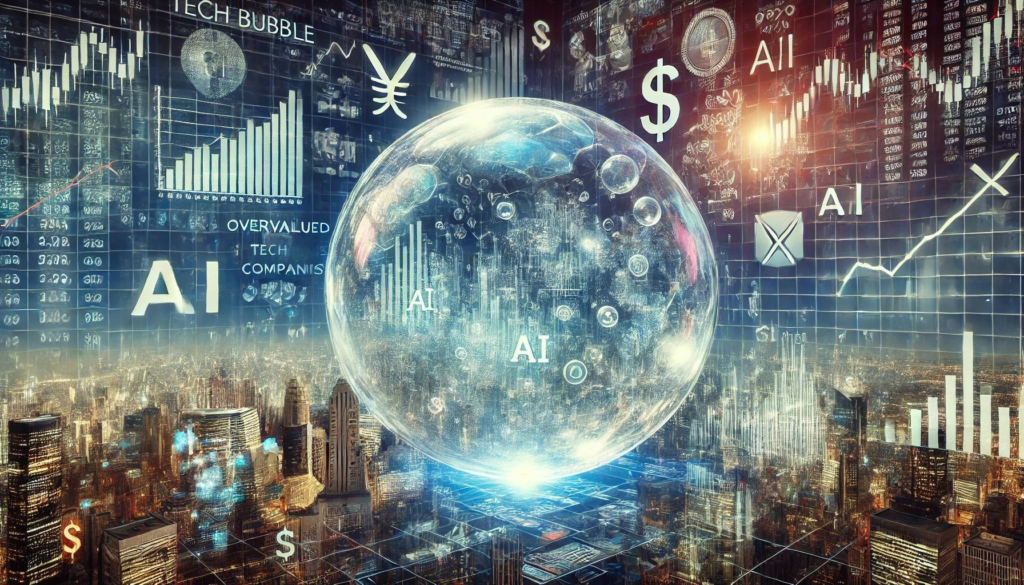
Artificial intelligence has become one of the most powerful forces shaping the US economy in 2026. From stock market valuations and corporate investments to productivity forecasts and labor market shifts, AI is influencing nearly every major economic indicator. While the technology promises long-term efficiency and innovation, economists and policymakers are increasingly asking a critical question: Is the AI boom creating real economic value, or is the US heading toward an AI-driven economic bubble?
This question matters not only for investors and businesses, but also for households, workers, and policymakers navigating inflation, interest rates, and long-term economic stability.
Background: The Rise of AI as an Economic Driver
The current AI boom accelerated rapidly after breakthroughs in generative AI, automation tools, and cloud-based computing. Major US firms have increased capital spending on AI infrastructure, semiconductors, and data centers, while financial markets have priced AI leadership into company valuations.
Historically, similar moments—such as the dot-com expansion of the late 1990s—combined genuine technological progress with excessive speculation. The AI boom shares some of these characteristics, raising concerns about asset overvaluation and economic imbalance.



Key Economic Indicators to Watch
Several economic indicators help explain whether AI-driven growth is sustainable:
- GDP growth: AI-related investment has contributed to US economic growth, particularly through productivity gains in technology and services.
- Equity market concentration: A small group of AI-focused companies now account for a large share of stock market gains, increasing systemic risk.
- Interest rates: Higher rates raise borrowing costs and reduce speculative investment, testing the durability of AI-related spending.
- Inflation trends: AI may lower costs long term, but short-term infrastructure spending can add inflationary pressure.
These indicators suggest both opportunity and vulnerability within the current expansion.
What Is Driving Bubble Concerns?
Economists highlight several contributing factors behind bubble fears:
First, valuation growth has outpaced earnings growth for many AI-linked firms. Expectations of future profits are often based on optimistic adoption timelines rather than proven cash flows.
Second, capital concentration is increasing. Investment funds, pension portfolios, and retail investors are heavily exposed to AI-related equities, amplifying downside risk if sentiment shifts.
Third, policy uncertainty remains high. Regulatory frameworks for AI, data usage, and labor displacement are still evolving, creating uncertainty around long-term returns.
Current Impact on Businesses, Workers, and Markets
For businesses, AI has improved efficiency, automation, and data-driven decision-making. However, smaller firms face rising costs to compete with AI-heavy corporations.
In the labor market, AI adoption has increased demand for high-skilled workers while raising concerns about job displacement in clerical, customer service, and routine analytical roles. This uneven impact could widen income inequality if not addressed through workforce policy.
Financial markets remain optimistic, but increased volatility suggests growing awareness of downside risks.


Short-Term and Long-Term Economic Outlook
In the short term, AI investment is likely to continue supporting economic growth, even as interest rates remain elevated. Productivity gains could help offset inflationary pressures if adoption spreads beyond large firms.
Long term, outcomes depend on whether AI delivers measurable productivity improvements across the broader economy. If growth fails to match expectations, the risk of a market correction or recession increases, especially if global economic conditions weaken.
Risks and Uncertainties Ahead
Key risks include:
- Overinvestment in unprofitable AI ventures
- Sudden shifts in investor confidence
- Regulatory intervention or global trade disruptions
- Unequal labor market adjustments
While AI itself is not inherently destabilizing, unchecked speculation could magnify economic shocks.
FAQ’s ?
Conclusion: The AI boom represents a transformative moment for the US economy in 2026, offering both genuine innovation and potential financial excess. While artificial intelligence has the capacity to drive long-term productivity and economic growth, rising valuations, market concentration, and policy uncertainty highlight real risks.
For policymakers, investors, and households, the key takeaway is balance. Encouraging innovation while monitoring speculation, labor market shifts, and financial stability will determine whether AI becomes a foundation for sustainable growth—or a cautionary lesson in economic overconfidence.
#AIEconomy #AIBoom #USEconomy2026 #EconomicAnalysis #TechAndEconomy #MarketRisk #EconomicGrowth #InterestRates #InflationOutlook #RecessionRisk #FinancialMarkets #GlobalEconomy #Anslation #Carrerbook