

Most of us have fallen into the exact same trap. You’re standing in front of your bathroom mirror at midnight, staring at your reflection under that harsh overhead light. You spot a bump or a dry patch on your skin, you start overanalyzing every single pore, and within ten minutes, you’re scrolling through your phone looking at an $80 serum that promises to “resurface” your face by Tuesday.
So you buy it. It arrives in a shiny glass bottle. You put it on, it stings a little—which you convince yourself means “it’s working”—and three days later, your face is bright red, itching, and breaking out in tiny stress bumps. So you shove that bottle to the back of the drawer under your sink, right next to the five other expensive bottles from last year that did the exact same thing.
Here is the truth nobody selling a 12-step routine wants to admit: your skin is a living organ, not a piece of polished glass. It doesn’t need a shelf full of harsh active chemicals or forty-five minutes of complicated layering every morning. It simply responds to how you treat it every day—how gently you wash it, whether you keep it hydrated, how much sun it takes, and how much rest you actually give your body.
Stop Scrubbing Your Face Like a Dirty Frying Pan

Washing your face at night makes total sense. Throughout the day, your skin accumulates sweat, natural oils, dust, pollution, and whatever makeup or sunscreen you applied in the morning. Getting all of that off allows your face to rest and reset while you sleep.
Where most of us mess up is going completely overboard.
Have you ever washed your face, patted it dry, and felt that tight, “squeaky clean” pull across your cheeks? That isn’t actually a good sign. In fact, it’s a warning flare.
That squeaky feeling usually means you’ve completely stripped away your skin’s natural lipid barrier—the invisible, protective layer of oils and ceramides that keeps bad bacteria out and good moisture locked in. When you scrub too aggressively or use harsh soaps, your skin panics. It thinks it’s dying of a drought, so it starts pumping out more oil to make up for what it lost. Suddenly, you’re twice as greasy and twice as breakout-prone as when you started.
- Turn down the heat: Steaming hot water feels amazing in the shower, but it strips your facial oils in seconds. Stick to lukewarm water.
- Ditch the aggressive tools: You don’t need abrasive scrubs with crushed fruit pits, stiff motorized brushes, or scratchy washcloths. The soft pads of your fingers are all you really need.
- Listen to the feeling: If your face feels tight, itchy, or raw right after washing, your cleanser is simply too harsh. Swap it for a mild, non-foaming cream or a basic, gentle gel cleanser.
Give Your Skin Moisture (Yes, Especially If You’re Oily)
If you have oily or breakout-prone skin, your natural instinct is probably to skip moisturizer altogether. You figure adding more moisture to an already shiny face will just turn you into a greasy mess and clog every pore on your forehead.
It’s actually the exact opposite.
When your skin gets dehydrated, it works overtime to protect itself by churning out even more oil. A decent moisturizer doesn’t add grease; it just traps water in the outer layers of your skin and helps repair the daily wear-and-tear on your barrier.
Matching Moisture to Your Real Skin Type
- Dry Skin: Needs richer creams that replace lost lipids and seal in hydration (look for ceramides, shea butter, and natural oils).
- Oily Skin: Needs light, water-based gel formulas that hydrate without weight (look for oil-free gel lotions or light fluids).
- Combination Skin: Needs balanced hydration that doesn’t overload the center of your face (a light lotion all over, with extra cream only on dry cheek areas).
- Sensitive Skin: Needs calm, animistic hydration that repairs without irritating (fragrance-free, dye-free creams with short ingredient lists).
The Two-Minute Window: Put your moisturizer on within two minutes of stepping out of the shower or washing your face, while your skin is still slightly damp. This traps surface water right into your skin before it evaporates into the dry air around you.
Treat Sunscreen Like Brushing Your Teeth
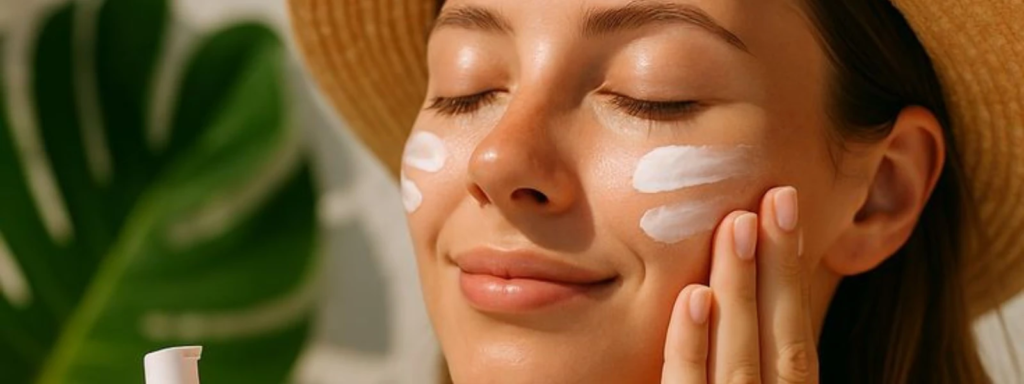
If you only pick one single habit from this entire guide to follow for the rest of your life, make it this one.
Most of us associate sunscreen with beach towels, melted ice cream, and hot summer afternoons. But UV radiation from the sun is quietly damaging your skin cells all year long—even when it’s freezing outside, completely overcast, or when you’re just sitting near a window working on your laptop.
Unprotected sun exposure is responsible for up to 80% of the visible changes we associate with premature aging. That includes dark spots, deep lines, loss of bounce, and broken capillaries. Not to mention, it significantly jacks up your risk of skin cancer.
- Make it automatic: Put your sunscreen right next to your toothbrush or your daily deodorant so you literally can’t forget it before leaving the house.
- Look for “Broad-Spectrum”: This label guarantees that the bottle protects against both UVA rays (deep aging) and UVB rays (surface burning).
- Don’t skimp on amount: Most people only apply about half as much sunscreen as they actually need. Squeeze out about two full finger-lengths of product for your face and neck combined.
Drink Water, But Don’t Force-Feed Yourself Gallons
You’ve probably seen people online claim that drinking five liters of water a day magically cleared their acne and completely transformed their life overnight.
While staying hydrated is genuinely good for your body, guzzling gallon after gallon isn’t going to magically erase wrinkles or stop a hormonal breakout. Your skin needs a sensible balance of internal hydration (drinking fluids throughout the day) and external hydration (using a basic moisturizer that stops water from evaporating off your face).
Listen to your body’s natural thirst signals rather than forcing yourself to chug water until you feel sick. If your urine is a pale, straw-like yellow, your hydration levels are totally fine. Keep a reusable water bottle on your desk so sipping throughout the workday happens naturally.
Keep Your Hands Away From Your Face
Stop for a second and think about everything your hands have touched in the last two hours: your phone screen, door handles, keyboard keys, public counters, and steering wheels. Every time you rest your chin on your hand during a meeting or lean your cheek against your palm, you’re transferring all that built-up grime and bacteria straight onto your pores.
And then, of course, there’s picking.
When a spot pops up, the urge to squeeze or pick at it can feel almost impossible to resist. But popping a pimple pushes bacteria deeper down into your pore and tears the surrounding skin tissue underneath. What would have been a minor red mark that disappeared in three days turns into a painful, swollen bump that leaves a dark scar for three months.
- Catch yourself in the act: Start noticing when you absentmindedly touch your face out of boredom, stress, or habit.
- Slap a hydrocolloid patch on it: If you have a blemish you can’t stop staring at, cover it with a tiny pimple patch. It physically blocks your fingers from picking while pulling out excess fluid.
- Step back from the mirror: Stop standing two inches away from a brightly lit magnifying mirror analyzing every single pore. Nobody else in the real world is looking at your face from that close up.
Take “Beauty Sleep” Seriously

It sounds like a cheesy cliché from an old magazine, but “beauty sleep” is rooted in real human biology.
When you fall into deep sleep, your body enters a natural state of cellular repair. Blood flow to your skin increases, cell turnover speeds up, and your system works hard to repair environmental damage accumulated throughout the day.
On the flip side, when you consistently miss out on sleep, your body releases elevated levels of stress hormones like cortisol. High cortisol breaks down collagen (the structural protein that keeps your skin firm) and triggers internal inflammation, leaving your face looking dull, pale, and far more prone to random breakouts.
Aim for 7 to 8 hours of solid rest. Keep your bedroom cool and dark, put your phone down 30 minutes before bed, and try to go to sleep around the same time each night. Your skin notices when you’re exhausted long before you do.
Feed Your Skin Whole Foods (Without Going to Extremes)
You don’t need to follow a hyper-restrictive diet, cut out every food you enjoy, or live on green juice to have decent skin. Extreme diets usually backfire anyway because they make life miserable and are impossible to stick with long-term.
Instead of stressing over what you need to banish from your kitchen, focus on adding rich, nourishing foods in. Your body literally builds new skin cells out of the raw nutrients you feed it.
- Healthy Fats: Avocados, olive oil, walnuts, and fatty fish help keep your cell membranes strong, flexible, and hydrated.
- Vitamin C: Oranges, bell peppers, strawberries, and broccoli help your body naturally synthesize collagen.
- Zinc: Found in pumpkin seeds, lentils, chickpeas, and eggs, zinc plays a massive role in tissue repair and inflammation control.
- Antioxidants: Brightly colored fruits and vegetables help neutralize free radicals caused by pollution and UV exposure.
Focus on eating real, colorful, whole foods most of the time, and enjoy a slice of pizza or cake when you want it. Balance always wins over strict perfection.
Swap Out Your Pillowcases and Face Towels

Think about this: you rest your face directly against your pillowcase for roughly seven to eight hours every single night. Over a few days, that piece of fabric slowly accumulates natural scalp oils, residual hair products, sweat, dead skin cells, and night creams.
If you don’t change your pillowcase regularly, you’re essentially pressing your clean face into a sponge of built-up grime for hours at a time.
- The Pillowcase Rule: Wash or swap your pillowcase at least once a week. If you have oily or acne-prone skin, flip it over after two nights and change it completely every four days.
- Separate Face Towels: Don’t use the exact same towel to dry your face that you used for your body after a shower or for your hands in the bathroom. Keep a small, clean cloth specifically for your face, and gently pat dry—never rub aggressively.
- Mind Hair Products: Heavy hair oils, leave-in conditioners, and dry shampoos easily transfer from your hair to your pillowcase, and then land right on your forehead and cheeks.
Stop Buying Every Product You See Trending Online
It is ridiculously easy to get sucked into skincare trends. You see a quick video showing off a sleek bottle with a fancy scientific name, and suddenly you feel like your routine is completely inadequate without it.
Before you know it, your bathroom counter is packed with four different exfoliants, three serums, two oils, and a drawer full of single-use masks.
Layering too many strong active ingredients (like retinoids, glycolic acid, salicylic acid, and vitamin C) all at once is the absolute fastest way to wreck your skin barrier. When your barrier breaks down, your face gets red, stings when you apply basic moisturizer, and breaks out in tiny, angry bumps.
Keep Your Daily Foundational Routine Simple
- Morning Routine: Gentle Wash (or plain water) $\rightarrow$ Lightweight Moisturizer $\rightarrow$ Broad-Spectrum Sunscreen
- Evening Routine: Gentle Cleanser $\rightarrow$ One Targeted Treatment (ONLY if needed) $\rightarrow$ Nourishing Night Cream
If you do want to try a new product, introduce it one at a time. Use it for at least three to four weeks before adding anything else. That way, if your face looks fantastic—or breaks out in a rash—you’ll actually know which product was responsible.
Learn to Adjust Your Habits with the Seasons
Your skin is constantly reacting to the environment around you. A heavy, rich cream that feels like a life-saver during freezing, windy winter months might feel suffocating, greasy, and heavy in the middle of a hot, humid July.
- In the Winter: Indoor heating and freezing winds pull moisture straight out of your skin. Switch to a creamier cleanser, use a heavier moisturizer packed with ceramides, and consider running a cool-mist humidifier in your bedroom at night.
- In the Summer: Humidity and warmth increase sweat and oil production. Swap heavy creams for lightweight gel-lotion formulas, stay diligent with reapplying sunscreen, and focus on thorough yet gentle evening cleansing.
Listen to how your skin feels when you wake up in the morning. If it feels tight and papery, give it a bit more moisture. If it feels slick and overloaded, lighten things up.
Find Ways to Unwind Your Nervous System
Have you ever noticed that a giant breakout seems to show up right before an important job interview, an exam, or a high-stress life event? That isn’t just bad luck—it’s biology.
Your skin and your nervous system are deeply connected. When you experience mental or emotional stress, your brain triggers a hormonal cascade that releases cortisol and adrenaline. These hormones increase systemic inflammation and signal your oil glands to produce thicker, stickier oil that clogs pores easily. Stress can also flare up underlying conditions like eczema, psoriasis, and rosacea.
While you can’t eliminate stress from your life completely, finding small ways to release physical tension matters immensely for your skin:
- Take a 15-minute daily walk outside without staring at your phone screen.
- Do basic stretches or light movement to drop the tension out of your shoulders and jaw.
- Practice taking slow, deep belly breaths when work starts feeling overwhelming.
- Make time for hobbies and activities that let your mind completely disconnect from obligations.
The Reality of Real Skin
Healthy skin isn’t about achieving airbrushed, poreless perfection. Real human skin has texture, visible pores, occasional spots, and natural variations in tone. That is completely normal.
You don’t need a bathroom cabinet stuffed with luxurious products or a complicated routine to look after yourself. Keep it simple: wash gently, keep your skin hydrated, shield it from the sun, eat real food, rest up, and treat your face with patience. When you focus on consistent, low-stress everyday care, healthy and comfortable skin follows naturally.
FAQ’S
What’s the deal with those ice rollers everyone is rubbing on their face?
They feel amazing and temporarily depuff morning face-bloat by shrinking blood vessels, but they won’t permanently change your skin structure or erase acne.
Why does my skin look completely ruined by 3 PM every single workday?
Blame office air conditioning, computer glare, and daily stress—they suck moisture straight out of your face, making your oil glands go into emergency overdrive.
Is expensive makeup actually worse for your skin than cheap drugstore stuff?
Price tag doesn’t matter at all here; it’s all about whether the ingredients clog your specific pores, regardless of whether it cost five dollars or fifty.
Should I stop eating chocolate and dairy if I want clear skin?
Unless you have a personal food allergy, cutting out entire food groups rarely cures acne on its own—stress and genetics play a way bigger role.
Why does my face feel super hot and flushed after applying basic moisturizer?
Your skin barrier is likely cracked and raw from over-exfoliating, meaning even plain water or gentle lotion is going to sting until it heals.