
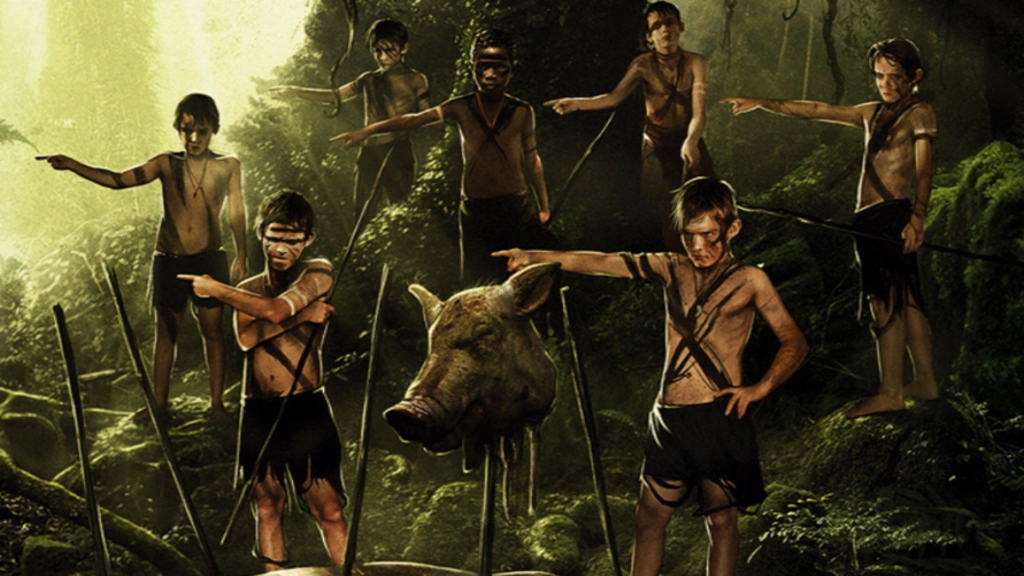
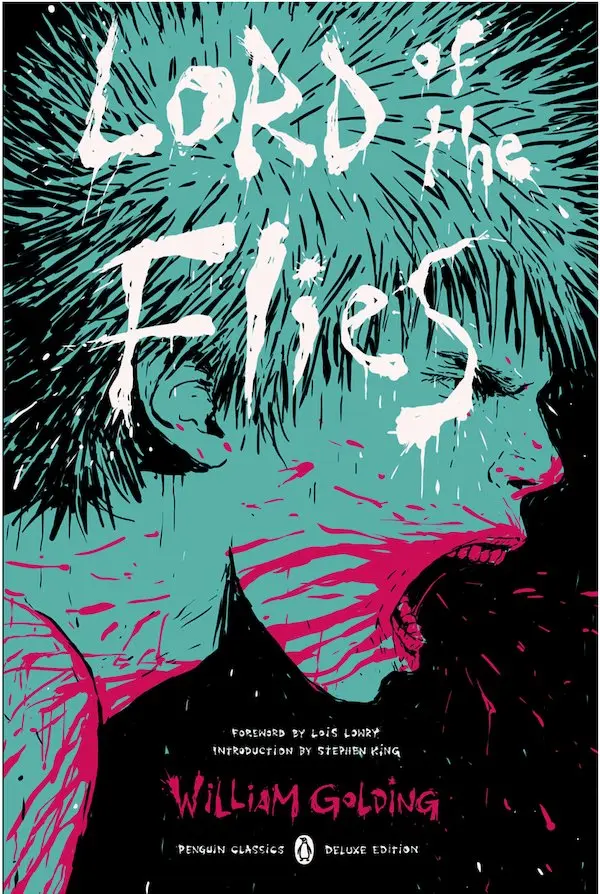
Lord of the Flies is a famous novel written by William Golding and published in 1954. The story is about a group of British schoolboys who get stranded on a deserted island after their plane crashes during a war. With no adults around, the boys must create their own society to survive. At first, they try to stay organized and civilized, but slowly their behavior turns savage and violent. The novel explores human nature, power, fear, and morality, showing how thin the line is between civilization and chaos.
The story begins when the boys gather on the beach and choose Ralph as their leader. Ralph represents order, democracy, and civilization. He tries to build shelters and keep a signal fire burning so they can be rescued. Another boy, Piggy, is intelligent and logical, symbolizing science and reason. Piggy finds a conch shell, which becomes a symbol of authority and rules, because whoever holds it has the right to speak. However, Jack, the leader of the choirboys, represents power, violence, and savagery. He becomes obsessed with hunting pigs and gradually gains followers who prefer fun and power over rules.
As time passes, the boys become afraid of a mysterious “beast”, which symbolizes fear and the unknown. This fear makes them irrational and leads them to believe in superstition rather than logic. Jack uses this fear to control the boys, promising protection if they follow him. Eventually, the boys split into two groups: Ralph’s group, which believes in order, and Jack’s tribe, which embraces violence. Jack’s tribe paints their faces, hunts animals, and performs tribal dances, showing their transformation into savages.
As time passes, the boys become afraid of a mysterious “beast”, which symbolizes fear and the unknown. This fear makes them irrational and leads them to believe in superstition rather than logic. Jack uses this fear to control the boys, promising protection if they follow him. Eventually, the boys split into two groups: Ralph’s group, which believes in order, and Jack’s tribe, which embraces violence. Jack’s tribe paints their faces, hunts animals, and performs tribal dances, showing their transformation into savages.
One of the most powerful moments in the story is when the boys kill Simon, who represents innocence and goodness. Simon discovers that the “beast” is not a monster but a dead pilot, meaning the real danger comes from humans themselves. However, when he tries to tell the others, they mistake him for the beast and kill him in a frenzied ritual dance. Later, Piggy is killed when Roger pushes a rock onto him, and the conch shell shatters, symbolizing the complete collapse of order and civilization. Ralph becomes the last target, hunted like an animal by Jack’s tribe. Just when Ralph is about to be killed, a naval officer arrives, and the boys are rescued. Seeing their savage behavior, Ralph breaks down and cries, realizing how far they have fallen from civilization.
- Realme 15 Pro 5G: Everything You Need to Know
 Introduction The Realme 15 Pro 5G is a premium mid-range… Read more: Realme 15 Pro 5G: Everything You Need to Know
 - What Is Avatar: Fire and Ash About? Complete Movie Breakdown
 What It Is Avatar: Fire and Ash is a 2025… Read more: What Is Avatar: Fire and Ash About? Complete Movie Breakdown
 - Rare Genetic Disorder SMA Type 1: Everything You Need to Know
 Spinal Muscular Atrophy (SMA) Type 1 is a rare and… Read more: Rare Genetic Disorder SMA Type 1: Everything You Need to Know
The novel contains many hidden themes. One major theme is the darkness of human nature. Golding suggests that evil is not taught by society but exists naturally within humans. Another theme is civilization vs. savagery, showing how quickly people can become violent without rules and authority. Power and leadership is another key theme, as Ralph’s democratic leadership fails while Jack’s dictatorship succeeds through fear and control. The loss of innocence is also important, as the boys start as innocent children but become brutal killers. The fear of the unknown drives the boys to irrational actions, showing how fear can manipulate people. Finally, the novel reflects war and society, suggesting that the island is a microcosm of the real world, where humans fight for power and control.
In conclusion, Lord of the Flies is not just an adventure story but a deep psychological and philosophical novel. It shows that without laws, structure, and morality, humans can easily descend into chaos and violence. Golding’s message is powerful: the real beast is inside us, and civilization is only a thin layer over our natural instincts.
#TheSevenDialsMystery #AgathaChristie #MysteryNovel #DetectiveFiction #ClassicBooks #BookReview #CrimeFiction #Anslation #Carrerbook