Most articles, news segments, and blog posts about climate change read like they were written by a committee of professors trying to hit an academic word count. You open a page expecting a straightforward explanation, and within two minutes, you are drowning in terrifying doom-and-gloom headlines, dense scientific jargon, complex charts, and policy acronyms that make your eyes glaze over.
It is completely natural to tune out when the conversation feels that distant, clinical, or overwhelming. But when you strip away the heavy textbooks, political shouting matches, and emotional noise, the core idea behind climate change is surprisingly simple.
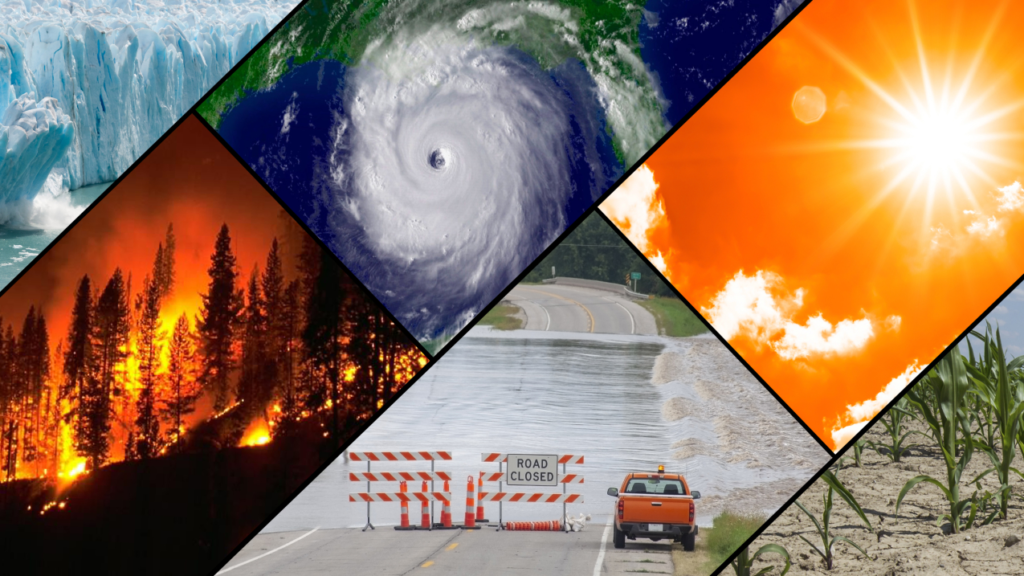
This isn’t just an abstract scientific theory about polar bears or melting glaciers thousands of miles away. It is a real-time shift in how our entire planet functions—and its ripple effects touch everything from your monthly electric bill and grocery receipts to your local weather, city infrastructure, and daily routine.
Here is a comprehensive, real-world, and completely practical breakdown of what climate change actually is, why the planet is heating up, how it impacts our everyday lives, and what real solutions look like.
1. Weather vs. Climate: The Mood vs. Personality Analogy

To make sense of anything related to environmental science, we have to clear up one of the most common mix-ups right out of the gate: the difference between weather and climate. Confusing these two terms is the number one reason people get sucked into endless arguments every time a cold front hits.
Think of weather as a person’s mood on a random Tuesday morning. You might wake up feeling irritable because you didn’t sleep well, or incredibly energized because the sun is shining. Weather is short-term, localized, and constantly changing. It’s a sudden afternoon rainstorm, a crisp autumn breeze, a three-day heatwave, or an unexpected April snowstorm.
Climate, on the other hand, is that same person’s overall personality over ten, thirty, or fifty years.
If someone who is usually calm and friendly has one bad morning and snaps at a coworker, you don’t instantly conclude that their entire personality has permanently changed. It was just a bad Tuesday mood.
In the exact same way, having a freezing snowstorm in the middle of January does not mean global warming is a myth or that the planet has stopped heating up. That snowstorm is just a day’s weather. But if you look at thirty years of data and notice that winters are systematically getting shorter, summer heatwaves are lasting twice as long, and night temperatures aren’t dropping like they used to—that is a personality shift. That is climate change.
Scientists track these long-term baseline trends across decades and centuries to map out how the Earth’s environment is actually evolving over time.
2. The “Heavy Blanket” Effect: How Global Warming Works
So, why is the planet actually heating up in the first place? You don’t need a PhD in atmospheric physics to understand the core mechanism. It basically comes down to a thick blanket.
Our planet is surrounded by a layer of gases known as the atmosphere. Naturally, this atmosphere contains specific gases—like carbon dioxide ($CO_2$), methane ($CH_4$), and water vapor—that act as a natural greenhouse. When sunlight reaches the Earth, the ground absorbs that radiation and warms up. As the ground radiates heat back out toward space, these atmospheric gases trap a portion of that heat, keeping the planet cozy enough for life to exist.
Without this natural greenhouse effect, the average temperature on Earth would be around $-18^\circ\text{C}$ (around $0^\circ\text{F}$)—turning the entire planet into an uninhabitable, frozen ice cube.
The problem isn’t that the greenhouse effect exists; the problem is that we have dramatically altered its balance.
For over 150 years—since the height of the Industrial Revolution—modern human society has run almost entirely on burning fossil fuels. We burn coal, oil, and natural gas to:
- Generate electricity for homes, schools, and offices.
- Power factories and heavy manufacturing plants.
- Run cars, trucks, trains, cargo ships, and commercial airplanes.
- Heat and cool massive commercial buildings.
Every single time we burn these carbon-rich fuels, massive volumes of extra carbon dioxide and other greenhouse gases pour into the atmosphere.
Think of it this way: Earth already had a comfortable, light summer sheet wrapped around it that kept temperatures just right. By dumping billions of tons of artificial carbon emissions into the atmosphere year after year, humanity has essentially taken that light sheet and added three heavy, suffocating winter duvets on top of it.
The sun’s light still passes right through to warm the ground, but when that heat attempts to escape back out into space, the extra-thick blanket traps far more energy than it should. As a result, global average temperatures creep steadily upward.
3. The Main Drivers Behind the Heat
While burning fossil fuels for energy and transportation gets most of the spotlight, global emissions come from a web of interconnected human activities:
Fossil Fuel Reliance
Electricity production and transportation remain the single largest sources of global greenhouse gas emissions. Despite huge growth in renewable energy over the last decade, the vast majority of global power grids still rely on coal and natural gas plants to meet baseline energy demands.
Deforestation and Land Destruction
Forests are the planet’s primary natural carbon sponges. Trees absorb vast amounts of carbon dioxide directly from the air during photosynthesis and lock it away safely in their trunks, branches, roots, and surrounding soil.
When vast rainforests and woodlands are cleared or burned—whether for timber, urban expansion, or creating vast cattle pastures—we suffer a double blow. First, we lose the living trees that were actively cleaning the air. Second, as those cut trees rot or burn, the stored carbon inside them gets released right back into the atmosphere.
Industrial Agriculture and Livestock
Farming feeds the world, but modern large-scale agriculture is a major contributor to warming. Cattle and sheep produce large amounts of methane—a greenhouse gas that is over 28 times more potent at trapping heat than carbon dioxide over a 100-year timescale—during their natural digestion process. Additionally, synthetic chemical fertilizers used in crop farming release nitrous oxide, another extremely potent heat-trapping gas.
Industrial Processes and Waste
Manufacturing materials like cement, steel, plastics, and chemicals requires massive amounts of heat and energy, often releasing carbon directly as a chemical byproduct. Furthermore, organic waste rotting in covered landfills without oxygen produces steady streams of methane gas that leak into the air.
4. How Climate Change Touches Ordinary Daily Life
It is easy to picture climate change as a slow, distant problem happening to melting polar ice caps or remote tropical islands. But the reality is that its ripple effects hit close to home, directly influencing our day-to-day routines, expenses, and local communities.
Global Temperature Increase
◦ Severe Weather & Flooding
◦ Higher Energy Bills
◦ Unpredictable Food Costs
1. Surging Utility Bills
As global temperatures rise, summer heatwaves are becoming longer, hotter, and far more relentless. In cities and suburbs alike, households are forced to run air conditioning units continuously for weeks on end just to keep living spaces safe and tolerable. This massive surge in residential energy demand directly translates to higher monthly utility bills and puts immense stress on aging electrical grids, leading to more frequent summertime brownouts and blackouts.
2. Grocery Store Price Spikes
Every meal on your dinner table relies on predictable, stable weather. Farmers need the right balance of seasonal temperatures, sunlight, healthy soil, and reliable rainfall to grow crops and raise healthy livestock.
When weather becomes erratic, agriculture becomes a high-stakes gamble. Prolonged droughts dry up irrigation channels, sudden late freezes destroy fruit blossoms, and intense heatwaves wither grain fields before harvest. When crop yields drop unexpectedly across major agricultural regions, the reduced supply drives up prices at the local grocery store for basic staples like bread, rice, coffee, fruit, and dairy.
3. Intense and Unpredictable Rainfall
A fundamental rule of physics is that warmer air holds more water vapor than cooler air—roughly 7% more moisture for every $1^\circ\text{C}$ increase in temperature.
This means that when atmospheric conditions line up for rain, storms have access to significantly more water. Instead of gentle, steady rain over several days, storms increasingly deliver massive, sudden downpours over just a few hours. This leads to severe flash flooding, washed-out roads, overwhelmed city storm drains, and flooded basements in neighborhoods that rarely experienced water damage in the past.
4. Lengthening Allergy and Pest Seasons
Warmer average temperatures mean that spring arrives earlier and winter cold snaps are shorter and milder. While a milder winter might sound pleasant on the surface, it has unintended consequences.
Plants bloom earlier and produce pollen for longer stretches of time, making seasonal allergy seasons far longer and more intense. Meanwhile, disease-carrying pests like mosquitoes, ticks, and agricultural bugs survive through milder winters in higher numbers, expanding their geographic range into regions that were previously too cold for them to thrive.
5. Nature’s Broken Clock: Ecosystems Under Strain

Human beings can adjust their thermostats, buy air conditioners, or order food from another region when local conditions get tough. Wildlife and plant ecosystems do not have that luxury. Nature operates on incredibly precise evolutionary timing, and rapid shifts in climate throw those delicate systems out of sync.
Disrupted Biological Timelines
Consider a migratory songbird that travels thousands of miles north every single spring. For thousands of years, these birds have timed their arrival so their eggs hatch at the exact week a specific caterpillar species emerges in local forests, providing abundant food for their newborn chicks.
If warmer spring temperatures cause those caterpillars to hatch two weeks earlier than usual, the timing snaps. By the time the birds arrive and their chicks hatch, the caterpillar population has already peaked and vanished. The young birds face starvation, and the entire local food chain takes a severe hit.
Normal Timing: Spring Warms→Caterpillars Hatch→Chicks Hatch (Food Available)
Shifted Climate: Spring Warms Earlier→ Caterpillars Hatch →(Gap) → Chicks Hatch (Starvation)
Ocean Warming and Coral Bleaching
The world’s oceans act as a massive thermal buffer, absorbing over 90% of the extra heat trapped by human-driven greenhouse gas emissions. But this thermal absorption comes at a steep ecological cost.
As ocean water temperatures rise, fragile marine ecosystems suffer. Coral reefs, which cover less than 1% of the ocean floor but support over 25% of all marine species, are exceptionally sensitive to temperature changes. When water temperatures stay just $1\text{–}2^\circ\text{C}$ above normal for several weeks, corals stress out and expel the colorful, microscopic algae living inside their tissues. This process—known as coral bleaching—leaves corals ghostly white, vulnerable, and starving.
Because coral reefs act as natural underwater nurseries, losing them threatens marine life, coastal protection against storms, and the livelihoods of millions of people who depend on local fisheries.
6. The “Urban Heat Island” Effect: Why Cities Act Like Ovens
If you live in or near a major city, you have probably noticed that urban areas always feel significantly hotter than surrounding rural towns or farmland just a few miles away. This isn’t just your imagination; it is a well-documented phenomenon known as the Urban Heat Island Effect.
Modern cities are constructed using vast amounts of hard, dense materials:
- Asphalt roads, parking lots, and highways.
- Concrete sidewalks, foundations, and high-rises.
- Brick structures and dark reflective rooftops.
These materials naturally absorb heat from the sun all day long and hold onto it tightly. At night, instead of cooling down rapidly like grass, forests, or open soil, concrete and asphalt slowly radiate that trapped heat back out into the surrounding air.
When you combine heat-absorbing infrastructure with the heat generated by millions of running car engines, commercial air-conditioning units blowing hot exhaust outdoors, and industrial activity, cities become massive heat sponges.
Rural Area: [Sunlight] ──> Absorbed by Plants/Soil ──> Rapid Night Cooling (Cooler)
Urban City: [Sunlight] ──> Absorbed by Concrete/Asphalt ──> Heat Radiates All Night (Hotter)
During a regional heatwave, the Urban Heat Island Effect amplifies ambient temperatures by several degrees, turning hot days into dangerous health hazards—especially for elderly residents, outdoor workers, and low-income households without access to high-powered cooling systems.
7. The Two-Part Solution: Mitigation vs. Adaptation
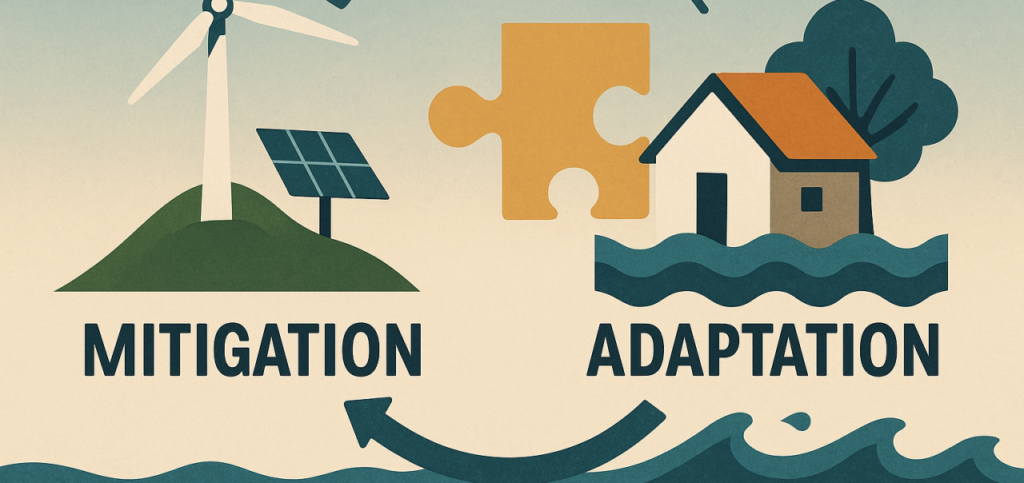
When discussions turn toward addressing climate change, people often debate which approach is best. In reality, experts agree that effective climate strategy requires two distinct, complementary approaches working in tandem: Mitigation and Adaptation.
| Strategy | Core Goal | Real-World Examples |
| Mitigation (Stopping the root cause) | Reducing the amount of greenhouse gases released into the atmosphere to prevent future warming. | • Swapping coal/gas plants for solar, wind, and nuclear energy. • Transitioning gas vehicles to electric transit. • Protecting rainforests and reforesting degraded land. • Improving energy efficiency in factories and appliances. |
| Adaptation (Managing the current impacts) | Adjusting infrastructure, policies, and habits to stay safe from the warming that is already locked in. | • Planting urban tree canopies and green roofs to cool cities. • Building sea walls and restoring coastal wetlands for flood defense. • Developing drought-resistant crop varieties for farmers. • Setting up municipal cooling centers during heatwaves. |
Why We Need Both
- Mitigation without Adaptation leaves communities defenseless against the climate shifts that are already happening today due to past emissions.
- Adaptation without Mitigation is like constantly mopping up water from a overflowing sink without ever turning off the running faucet. Eventually, the water will overwhelm your bucket.
By aggressively cutting emissions (mitigation) while simultaneously building resilient infrastructure (adaptation), society can minimize future risks while protecting communities in the present.
8. Can Individual Choices Actually Make a Difference?
When faced with a global challenge involving billions of tons of emissions, it is easy to feel small and ask: “Does it actually matter if I recycle, drive less, or lower my thermostat?”
The short answer is: Yes, but with realistic expectations.
It is true that individual lifestyle changes alone cannot solve climate change. Individual action cannot rewrite national energy grid policies, overhaul global shipping supply chains, or replace industrial manufacturing methods overnight. Those massive shifts require government policy, technological innovation, industrial updates, and corporate accountability.
However, individual actions matter for three critical reasons:
- Collective Scale: When millions of households make small, sustainable choices—such as reducing food waste, insulating homes, switching to energy-efficient lighting, or choosing public transit—the combined impact measurably reduces overall energy and resource demand.
- Market Signals: Consumer preferences drive corporate behavior. As demand surges for electric vehicles, plant-based food options, energy-efficient appliances, and sustainable goods, companies scramble to reallocate capital and green their product lines to stay competitive.
- Cultural Normalization: Individual choices influence family, friends, and local communities. When sustainable habits become the cultural norm, it creates the social backing necessary for leaders to implement bolder environmental policies.
The goal is not to live a flawlessly zero-emission, saintly lifestyle—which is practically impossible in modern society. It is about making sensible, realistic adjustments where you can, while advocating for broader systemic changes at the community and national level.
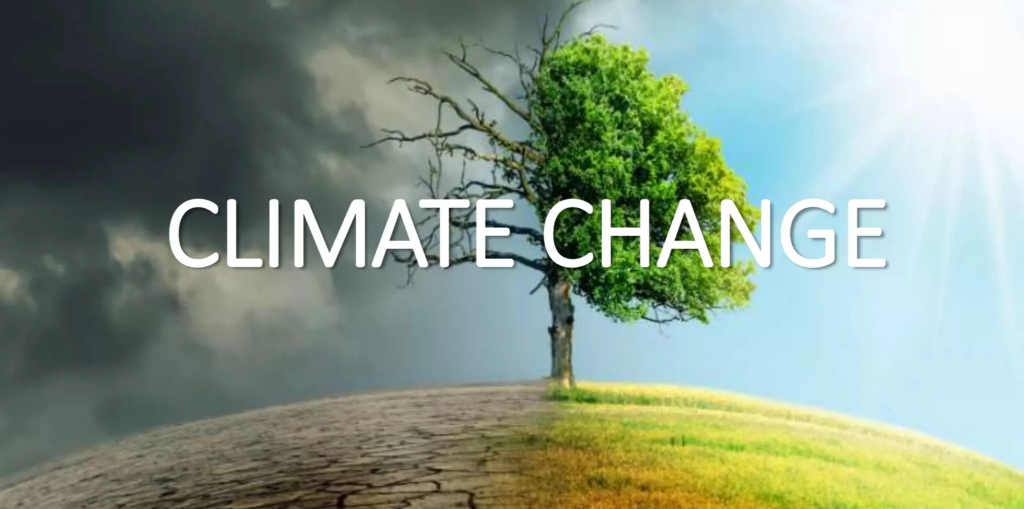
Understanding climate change doesn’t require an environmental science degree, nor should it leave you feeling completely helpless or paralyzed by fear.
At its core, climate awareness is simply about understanding how our world works, recognizing that our old, fossil-fuel-intensive way of powering society needs an upgrade, and supporting common-sense solutions that make our cities cooler, our energy grids cleaner, our food systems more resilient, and our economy future-proof.
The transition toward a cleaner world isn’t about giving up comfort or stepping backward; it is about building a smarter, healthier, and far more reliable future for everyone.
FAQ’S
1. Are we really causing climate change, or is Earth just doing its usual thing?
Sure, nature has its own cycles, but we’ve sped things up like crazy by burning stuff and trapping heat under a thick layer of pollution.
2. Why should I care about a couple of degrees’ difference anyway?
Because that little temp jump is why your summer AC bills are brutal, grocery prices keep spiking, and basic weather is getting unpredictable.
3. Why is my neighborhood a complete furnace every single summer?
Cities are basically built out of heat sponges—asphalt, brick, and dark roofs soak up sunlight all day and roast you all night.
4. Does me recycling or riding a bike even matter when big factories exist?
On your own, it feels tiny, but when millions of us demand better options, massive companies are forced to change how they operate.
5. Is the planet completely doomed, or is there still hope?
We’re definitely not doomed—if we start fixing how we power our lives and build our cities today, we can easily avoid the worst-case scenario.