
For someone who is completely new to investing, the stock market can feel like a place where everyone else knows what they are doing except you. You open a financial app and suddenly there are charts moving up and down, percentages changing every few seconds, unfamiliar terms everywhere, and people online confidently talking about stocks you have never even heard of. It is easy to look at all of that and think, “Maybe investing just isn’t for me.”
Honestly, that feeling is pretty normal.
The good news is that you do not need to understand every market chart, financial abbreviation, or trading strategy before you can learn how stock investing works. You also do not need to sit in front of a screen all day watching prices move. At its heart, investing is much simpler than the internet sometimes makes it seem.
You are putting your money into businesses or investment funds because you believe they can potentially grow or generate income over time. From there, the real challenge is learning how to make sensible decisions, manage risk, and avoid letting excitement or fear control every move.
What Does Stock Investing Actually Mean?
Let’s start with the most basic question: what are you actually buying when you purchase a stock?
A stock represents a small ownership interest in a company. If you buy shares of a business, you become a shareholder. Your ownership may be incredibly small, especially when you are investing in a large corporation, but the basic idea remains the same.
Companies issue shares for a reason. They can use the money they raise to expand operations, develop new products, open facilities, hire people, enter new markets, or invest in future growth. Investors, meanwhile, buy those shares because they believe the company may become more valuable over time.
Some companies also pay dividends, which means shareholders may receive a portion of the company’s profits.
The confusing part for beginners is that the price of a stock can move much faster than the underlying business itself. A company’s share price might jump or fall dramatically in a single day because of news, investor expectations, economic conditions, earnings announcements, interest rates, or changes in market sentiment.
That is why it helps to remember one simple thing: the number you see next to a stock is its current market price, not the complete story of the business.
A company is much more than a moving number on an app.
Why Do People Invest in Stocks?
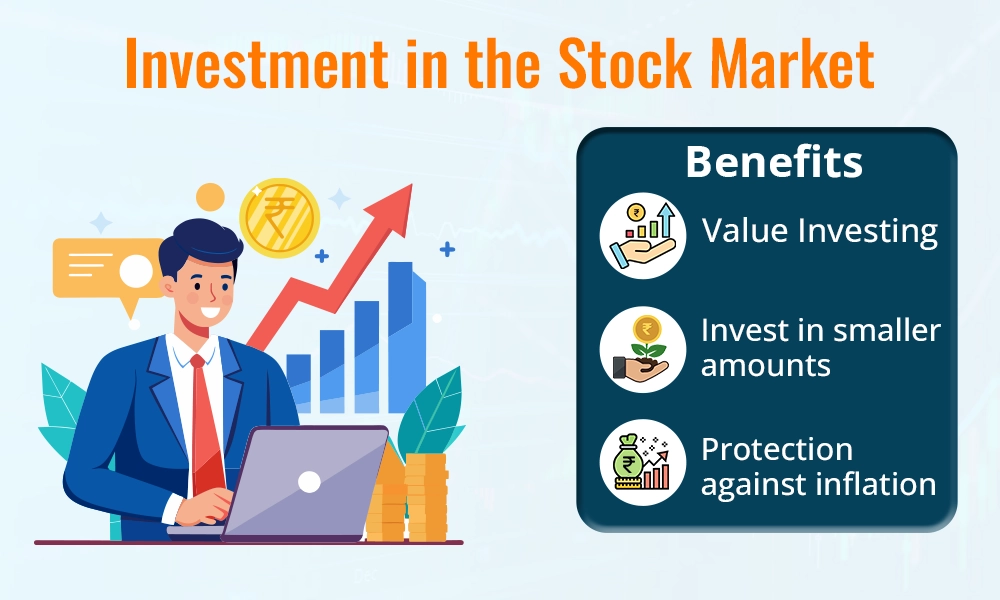
People invest for different reasons, but one common goal is to give their money an opportunity to grow over the long term.
Imagine saving money for many years while the cost of everyday things continues to increase. The amount in your account may stay the same, but what that money can actually buy could change. This is one reason people look beyond simply keeping all of their long-term savings in cash.
Stocks have become an important part of many long-term investment strategies because businesses can grow, increase their earnings, expand their customer base, and potentially become more valuable.
Someone might invest to prepare for retirement. Another person might be working toward a long-term financial goal. Someone else may simply want to develop the habit of investing regularly.
But there is an important reality to remember: stocks can also lose value.
The market does not move upward in a neat, predictable line. There will be good periods, disappointing periods, sudden drops, and times when absolutely nothing seems to happen.
If you expect your investment to make money immediately, those normal fluctuations can feel unbearable. If you understand from the beginning that investing is a long-term process, you may find it easier to stay focused when the market gets noisy.
Start With a Goal Instead of a Random Stock
Before you start searching for “best stocks to buy,” figure out what you are actually trying to accomplish.
This step sounds boring compared with choosing an exciting company, but it can make a huge difference.
Ask yourself why you are investing. Are you trying to build long-term wealth? Are you investing for retirement? Are you simply trying to create a regular investment habit?
Then think about when you might need the money.
If you are going to need your money very soon, the stock market may not give you enough time to recover from a sudden decline. If your goal is many years away, you generally have more time to experience market ups and downs.
You do not need an elaborate financial plan just to begin thinking about this. Even something as simple as, “I want to invest a comfortable amount regularly for the next several years,” gives you more direction than buying a random stock because someone mentioned it on social media.
Be Honest About How Much Risk You Can Handle
This is where investing becomes personal.
Two people can look at the exact same stock and have completely different reactions to its price movement. One person might see a 15% decline and think, “The market is having a rough week.” Another person might immediately panic and want to sell everything.
Neither reaction exists in a vacuum. Your financial situation, experience, goals, and comfort with uncertainty all influence how you respond.
Some established companies may have relatively mature businesses, while smaller or rapidly growing companies can experience much bigger price swings.
Before investing, think about how you would genuinely feel if your portfolio suddenly lost a noticeable portion of its value.
Would you be able to step back and assess the situation calmly? Or would you feel so uncomfortable that you would sell immediately?
Knowing this about yourself is useful because the best investment strategy on paper is not very helpful if you cannot stay with it when markets become stressful.
Understand the Company Before Buying Its Stock

One of the easiest ways to start learning about stocks is to look at businesses you already understand. Think about companies whose products you use, services you pay for, or brands you regularly see. You may already have a basic idea of what they sell and who their customers are.
That familiarity can be useful, but it should not be the end of your research. One of the easiest ways to start learning about stocks is to look at businesses you already understand.
Think about companies whose products you use, services you pay for, or brands you regularly see. You may already have a basic idea of what they sell and who their customers are.
That familiarity can be useful, but it should not be the end of your research.
Just because you love a company’s product does not automatically mean its stock is a good investment. A business can have a popular product and still have significant debt, weak profitability, serious competition, or other financial problems.
Before buying, try to explain the company in plain language.
What does it sell?
Who pays for it?
How does it make money?
What makes customers choose it instead of a competitor?
If you cannot explain the business without using a dozen complicated financial terms, take a little more time to understand it.
You do not need to know everything. You simply want to know what you are putting your money into.
Learn a Few Financial Numbers Without Becoming an Accountant
Financial statements can look intimidating at first, but you do not have to become an accounting expert to understand the basics.
Start with revenue. This is the money a company brings in from selling its products or services.
Then there is profit, which is what remains after the business pays its expenses.
You may also come across earnings per share, or EPS. This helps show how much of the company’s earnings are associated with each share.
Debt is another important area to look at because companies borrow money for many different reasons, but too much debt can create additional pressure, especially when business conditions become difficult.
Cash flow is also worth understanding because it provides information about the movement of actual cash through the business.
Then there is the P/E ratio, or price-to-earnings ratio, which investors commonly use when thinking about how a company’s stock price compares with its earnings.
You do not have to memorize every financial ratio on your first day. Start slowly. Learn what each number means, and over time the language of company analysis becomes much less intimidating.
A ₹50 Stock Is Not Automatically Cheaper Than a ₹2,000 Stock
This is a surprisingly common misunderstanding among new investors.
Looking only at the price of one share does not tell you whether a company is cheap or expensive.
A stock trading at ₹50 could belong to a company that investors value very highly relative to its earnings. Meanwhile, a company with a ₹2,000 share price could potentially be valued differently based on its size, earnings, growth, and number of outstanding shares.
Think about it like shopping for a cake.
A smaller cake costing ₹500 is not necessarily a better deal than a larger cake costing ₹1,000. You need to know how much cake you are actually getting.
Stocks work similarly. Look beyond the individual share price and learn about the company’s overall valuation and financial performance.
Diversification Can Make the Journey Less Dependent on One Company

Imagine putting almost all of your investment money into one company. Everything may feel wonderful while the stock is rising.
Then something unexpected happens.
The company reports disappointing results. A competitor launches a better product. New regulations affect the industry. Management makes a major mistake.
Suddenly, your entire portfolio is affected because you placed so much faith in one business.
Diversification is basically about avoiding that kind of concentration.
By spreading investments across different companies, industries, or asset types, you reduce the chance that one company’s problems will completely dominate your portfolio.
It does not make investing risk-free. Nothing does. But it can make your overall investment experience less dependent on one particular company getting everything right.
Index Funds and ETFs Can Keep Things Simpler
Not everyone wants to spend their evenings reading company reports and following business news.
And that’s completely understandable.
This is one reason index funds and ETFs can be useful to learn about. Instead of choosing individual companies one at a time, these investments can provide exposure to a collection of companies.
For example, a broad-market index can include businesses from different industries, allowing investors to participate in the performance of a wider group rather than depending entirely on one company.
For beginners, the appeal is fairly obvious: diversification can be built into one investment, and there may be less need to constantly research individual stocks.
It does not mean index funds or ETFs are guaranteed to make money. They can still fall when the market falls. But they can offer a simpler way of approaching broad-market investing.
Investing Is Not the Same as Trading
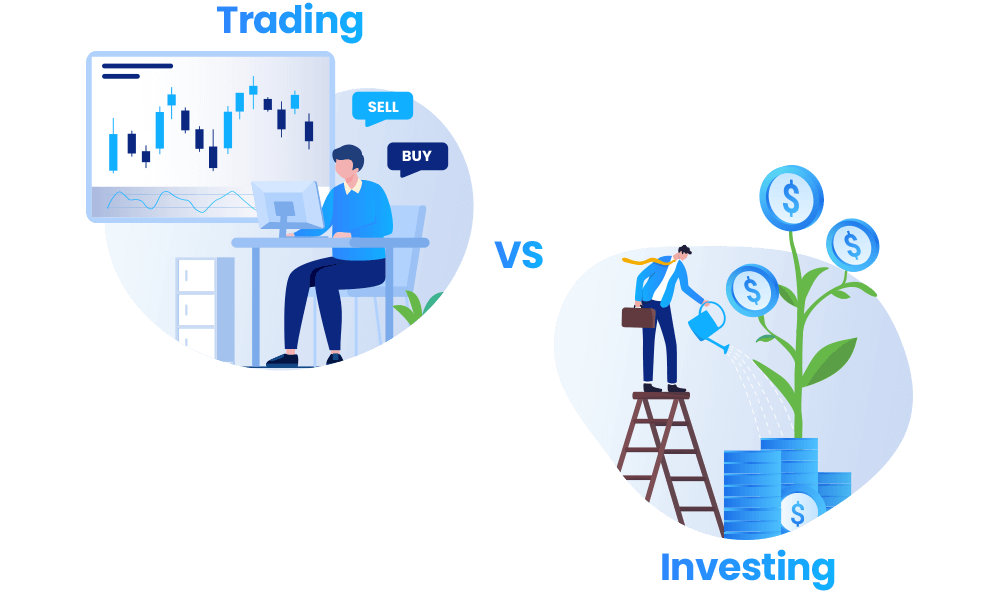
This is another area where beginners can easily get confused.
Investing generally involves thinking about the long-term potential of a business or collection of investments. Trading, on the other hand, usually focuses much more heavily on shorter-term price movements.
Trading looks exciting online.
You see someone post a screenshot showing a quick profit, and for a moment it can look like making money in the market is incredibly easy.
What you usually do not see is the complete picture.
You may not see the losing trades, the stress, the costs, or the decisions that did not work out.
Long-term investing can feel much less exciting, but that is not necessarily a bad thing. Sometimes boring and consistent is exactly what an investor wants.
Do Not Let Fear and FOMO Run the Show
The stock market has a funny way of testing your emotions.
When prices are climbing, everyone suddenly seems confident. You start wondering whether you are missing out. This is where FOMO, or the fear of missing out, can push people into buying simply because a stock is getting attention.
Then the market drops.
Suddenly those same people are talking about how everything is going wrong.
Fear can lead investors to sell during a decline without first asking whether anything meaningful about the investment has actually changed.
Having a plan beforehand can help.
Know why you invested. Understand the risks. Decide what matters to you before the market starts moving dramatically.
And perhaps most importantly, you do not need to check your portfolio every few minutes. Watching every tiny price movement can make normal market activity feel much more dramatic than it actually is.
Be Careful With Stock Advice on Social Media
There is no shortage of investment advice online.
Some of it can be educational and genuinely useful. Some of it is simply someone’s personal opinion. And some posts are designed to create excitement around a particular stock.
Whenever someone says a stock is a “sure thing,” slow down.
Ask yourself why they are recommending it. What information are they using? Have they discussed the risks as well as the potential upside?
Never let someone Elysee’s confidence replace your own research.
You do not have to ignore every opinion you find online. Just remember that hearing an idea and deciding to invest are two completely different things.
Dividends Can Add Another Part to the Investing Story
Some companies distribute part of their profits to shareholders through dividends.For investors who are interested in income, dividends can be an important part of understanding how a company may provide value to shareholders.
But again, there is no magic number.
A very high dividend yield does not automatically mean a stock is attractive. Sometimes a high yield appears because the company’s share price has fallen sharply.
So instead of looking only at the dividend percentage, consider the company’s earnings, cash flow, and ability to continue making those payments.
Reinvesting dividends can also bring compounding into the picture. Over time, reinvested earnings can potentially generate additional earnings of their own.
That is one reason time matters so much in long-term investing.
Investing Regularly Can Help Build a Habit
Many beginners spend a lot of time wondering whether they should invest today, tomorrow, next week, or wait for a market dip.
The problem is that nobody can consistently know exactly when the market has reached its perfect low point.
One approach is to invest a fixed amount at regular intervals. This is commonly called rupee-cost averaging or dollar-cost averaging.
The basic idea is simple.
When prices are higher, your regular amount buys fewer shares. When prices are lower, that same amount buys more.
The goal is not to perfectly predict the market. It is to create a consistent habit instead of constantly trying to guess what prices will do next.
Watch Those Small Investment Costs
Fees can be easy to ignore because they often look tiny.
But when you invest for many years, repeated costs can gradually make a difference.
Depending on the investment and platform, costs might include brokerage charges, fund expense ratios, account fees, or other expenses.
Before investing, take a few minutes to understand the charges involved.
You do not need to obsess over every tiny fee, but unnecessary costs are worth paying attention to because money spent on fees is money that is no longer available to remain invested.
Mistakes Are Part of Learning
Almost every new investor makes mistakes.
Someone buys because a stock is trending.
Someone else puts too much money into one company.
Another person sells in panic after seeing a market decline.
Someone invests money that they actually needed for an upcoming expense.
And many beginners simply expect their investments to start producing impressive returns immediately.
The important thing is not pretending mistakes will never happen. It is learning to recognize them.
Investing becomes easier when you stop treating every decision as a race and start thinking in terms of habits, patience, research, and long-term goals.
A Simple Starting Point for Beginners
If you are ready to start learning about stock investing, you do not need to make ten big decisions in one afternoon.
Begin by getting your basic finances in order. Keep money available for emergencies and regular expenses. Decide what amount you can comfortably invest without putting pressure on your daily life.
Then learn about the investment platform and products available to you. Understand the fees before putting money into anything.
If individual stocks feel overwhelming, explore broad-market funds and ETFs and learn how they work.
If you eventually want to choose individual companies, start slowly. Pick businesses you understand and research them properly instead of trying to build a portfolio overnight.
Most importantly, keep learning.
Your first investment does not need to be perfect. Your understanding will improve as you gain experience.
Frequently Asked Questions
1. Is stock investing good for beginners?
Yes, beginners can start by learning the basics, understanding risk, and investing only money they can comfortably set aside.
2. How much money do I need to start investing?
There is no single perfect amount. Start with an amount that fits your budget instead of putting pressure on your everyday expenses.
3. Are stocks completely safe for long-term investing?
No, stocks can still lose value. Long-term investing may give you more time to handle market ups and downs, but there are always risks.
4. Should beginners buy individual stocks?
They can, but it is important to understand the business first. Broad index funds and ETFs can also be a simpler way to get diversified exposure.
5. How can I avoid emotional investing?
Have a clear plan before investing and avoid reacting to every market move. Giving yourself some distance from daily price changes can really help.